Scope
For the 2023 season, Wisconsin Racing (UW-Madison Formula SAE) developed both internal combustion and electric vehicles using a shared carbon fiber monocoque to reduce structural complexity.
The previous electric vehicle suffered from poor inverter packaging, limiting accessibility and making troubleshooting difficult. The updated chassis created an opportunity to redesign the system for improved serviceability and integration.
I led the end-to-end design and manufacturing of the high-voltage inverter housing for the 223e electric vehicle. The system integrated critical components including inverters, DC-DC converter, bulk capacitors, and control electronics within a compact, serviceable enclosure.
This required full ownership of mechanical architecture, electrical integration, thermal management, sealing, and manufacturing execution under aggressive competition timelines.
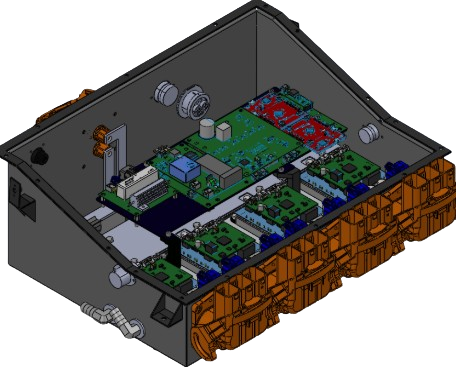
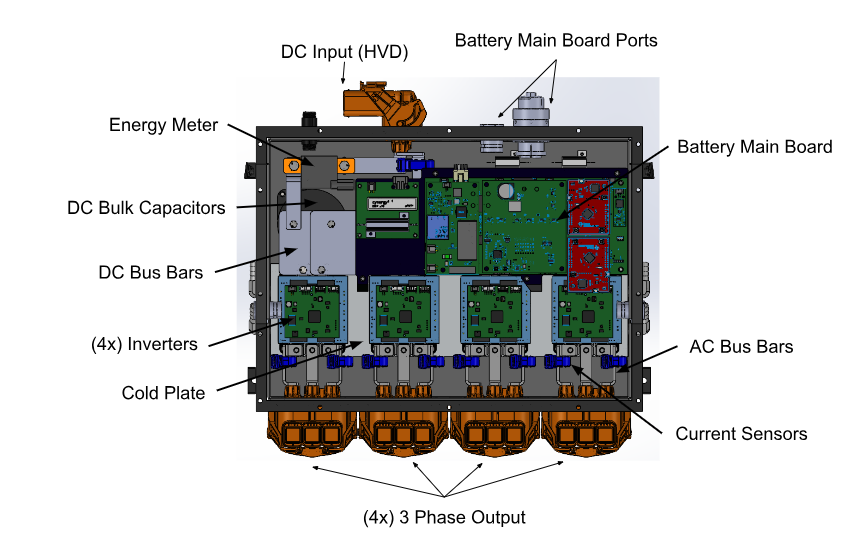
Design
Led mechanical design of the inverter enclosure in close collaboration with electrical and structures teams to ensure proper packaging, accessibility, and chassis integration.
Key design considerations included:
- Thermal management for high-power inverters and DC-DC converter
- High-voltage isolation and electrical integration
- Environmental sealing and structural rigidity
- Serviceability and packaging efficiency
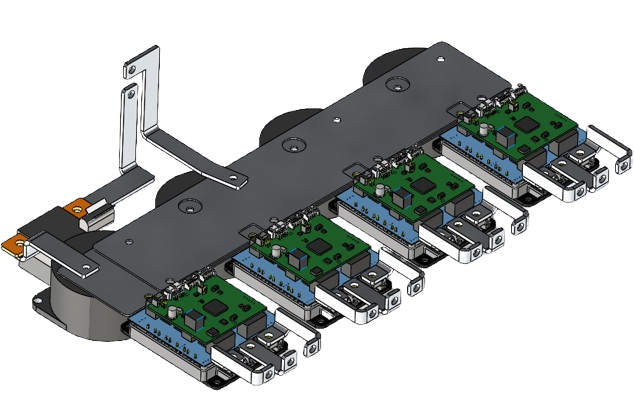
Bus Bar Design
Led the design and optimization of high-voltage copper bus bars connecting the DC input, bulk capacitors, and inverters.
Through geometry optimization and packaging refinement, achieved over a 50% reduction in mass compared to the previous design while maintaining current capacity and system reliability.
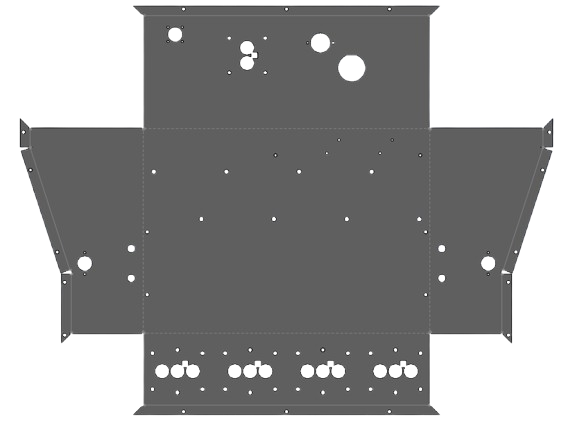
Manufacturing
Housing
The inverter enclosure was fabricated from bent and welded aluminum sheet metal. I created production-ready flat patterns and coordinated with manufacturers to ensure dimensional accuracy and proper weld sequencing.
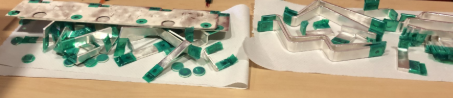
Bus Bars
Led full manufacturing process for high-voltage bus bars, including:
- Waterjet cutting
- Forming and bending
- Masking and plating
- Powder coating for electrical insulation and fire rating compliance
Cold Plate
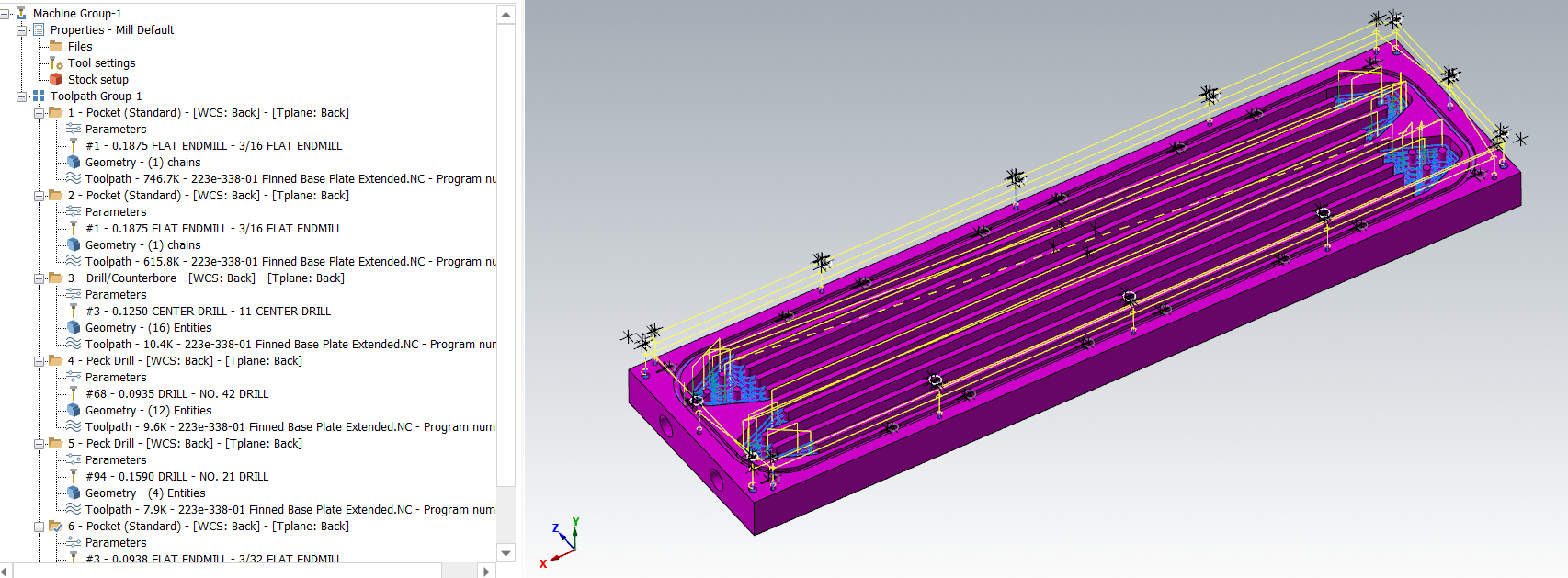
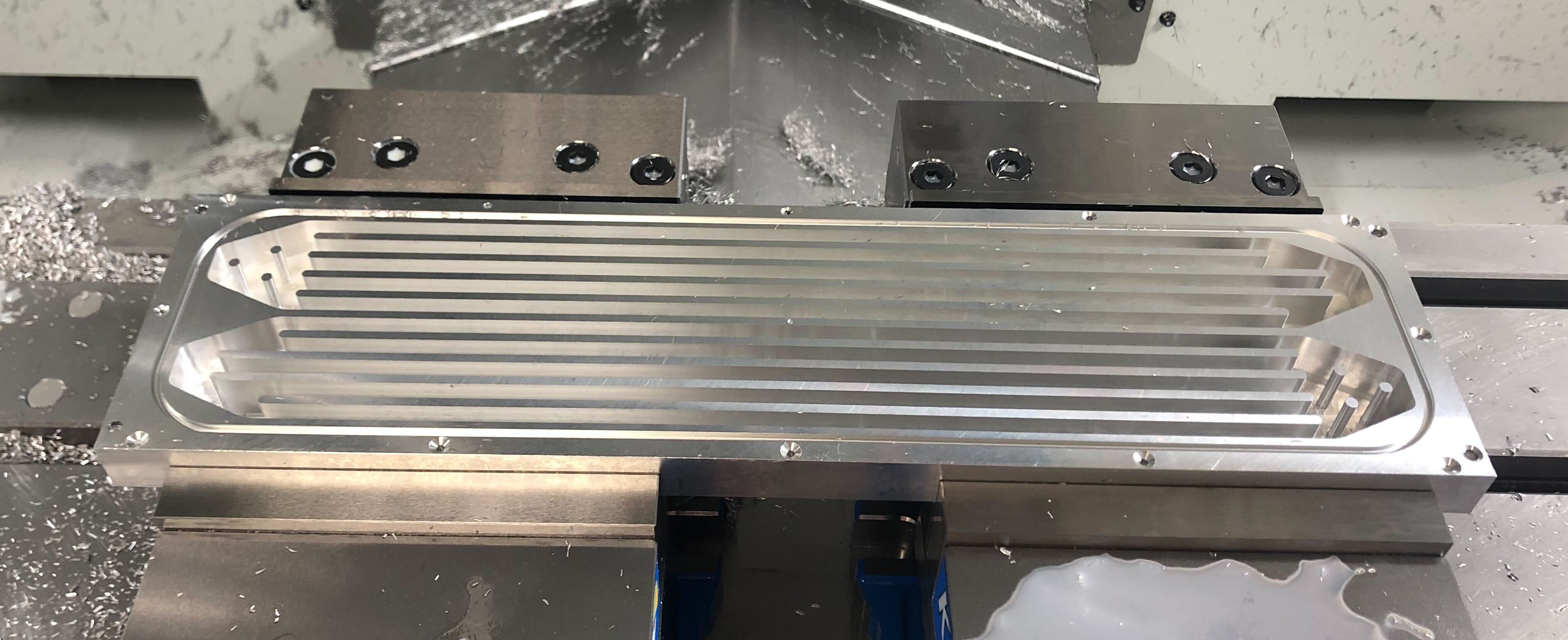
The most complex component was a liquid-cooled cold plate for inverter thermal management. Due to limited sponsor support and tight timelines, I independently executed the full manufacturing process:
- Earned CNC machining certifications
- Learned MasterCAM for toolpath programming
- Procured raw material stock
- Programmed and machined the part in-house
Summary
The inverter housing assembly was completed ahead of the first drive deadline, enabling multiple weeks of vehicle testing prior to competition. The system performed reliably throughout validation and contributed to an 11th place finish out of 75+ international teams.
This project strengthened my expertise in electro-mechanical integration, lightweight design, thermal management, and manufacturing execution. This demonstrated lifecycle ownership from concept through fabrication under schedule-critical constraints.